Beyond the Boilerplate: How Generative AI is Reshaping Developer Workflows
The software development landscape is evolving at an unprecedented pace, demanding more from developers than ever before. Historically, traditional development methods, while foundational, often struggle to keep up with the relentless pressure for faster time-to-market and increasingly complex system requirements. We're seeing developers grapple with the sheer volume of manual coding, debugging, and testing, which inevitably introduces bottlenecks and can lead to errors that are costly to rectify. This isn't just about efficiency; it's about the ability to innovate and respond to dynamic market needs.
Consider the pain points: the constant need to stay updated with myriad programming languages and frameworks, the intricate dance of integrating disparate systems, and the overwhelming task of maintaining extensive codebases. These challenges often divert valuable developer time away from strategic problem-solving and towards repetitive, boilerplate tasks. While we've seen incredible AI breakthroughs in various sectors, the integration of advanced machine learning development into the core of developer workflows has been a more recent, yet profound, shift. This is where the limitations of traditional approaches become glaringly apparent, highlighting the need for a paradigm shift.
The imperative for increased developer productivity isn't merely a desire; it's a strategic necessity for businesses aiming to remain competitive. Without innovative tools and methodologies, the burden on development teams grows, impacting everything from project timelines to product quality. This is precisely why the discussion around AI advancements and their role in reshaping how we build software is so critical. It's not about replacing human ingenuity, but augmenting it, allowing developers to focus on higher-value activities and navigate the complexities of modern software engineering with greater agility and precision.
The AI-Powered Code Assistant: From Concept to Creation
The journey of an AI-powered code assistant from conceptualization to a tangible, productive tool is a testament to significant AI breakthroughs. Initially, the idea of machines autonomously generating functional code seemed like a distant dream. However, relentless research and development in machine learning development have transformed this concept into a practical reality. Early prototypes were often limited in scope, capable of generating only snippets or highly templated code. Yet, these foundational steps were crucial in establishing the viability of AI in complex software engineering tasks.
As AI capabilities matured, particularly with advancements in neural networks and large language models, the sophistication of these assistants grew exponentially. We've moved from simple code completion to tools that can generate entire functions, suggest architectural patterns, and even refactor existing codebases. This evolution wasn't without its challenges; ensuring the generated code was not only syntactically correct but also semantically meaningful, efficient, and secure required overcoming substantial hurdles. The iterative process of training models on vast datasets of high-quality code, coupled with continuous feedback loops, has been instrumental in refining their accuracy and utility.
Today, AI-powered code assistants are a cornerstone of modern development workflows, offering unparalleled efficiency and precision. Their development has also spurred important discussions around AI governance, particularly concerning intellectual property, bias in generated code, and the ethical implications of autonomous code creation. Simultaneously, these tools are becoming increasingly adept at AI threat detection within the code they generate, proactively identifying vulnerabilities before they become critical issues. This continuous cycle of innovation and responsible deployment underscores the profound impact of these AI advancements on the future of software development.
Refactoring, Debugging, and Testing: AI's Role in Code Quality
When we talk about maintaining high code quality, especially in complex software ecosystems, the traditional methods often fall short under the pressures of rapid development cycles. This is where AI truly shines, offering robust solutions for refactoring, debugging, and testing that elevate our standards. AI's ability to analyze vast codebases and identify patterns makes it an invaluable partner in refining existing code, suggesting optimal refactoring strategies that enhance readability, maintainability, and performance. It's not just about automating rote tasks; it's about intelligent optimization that frees developers to focus on architectural innovation and complex problem-solving.
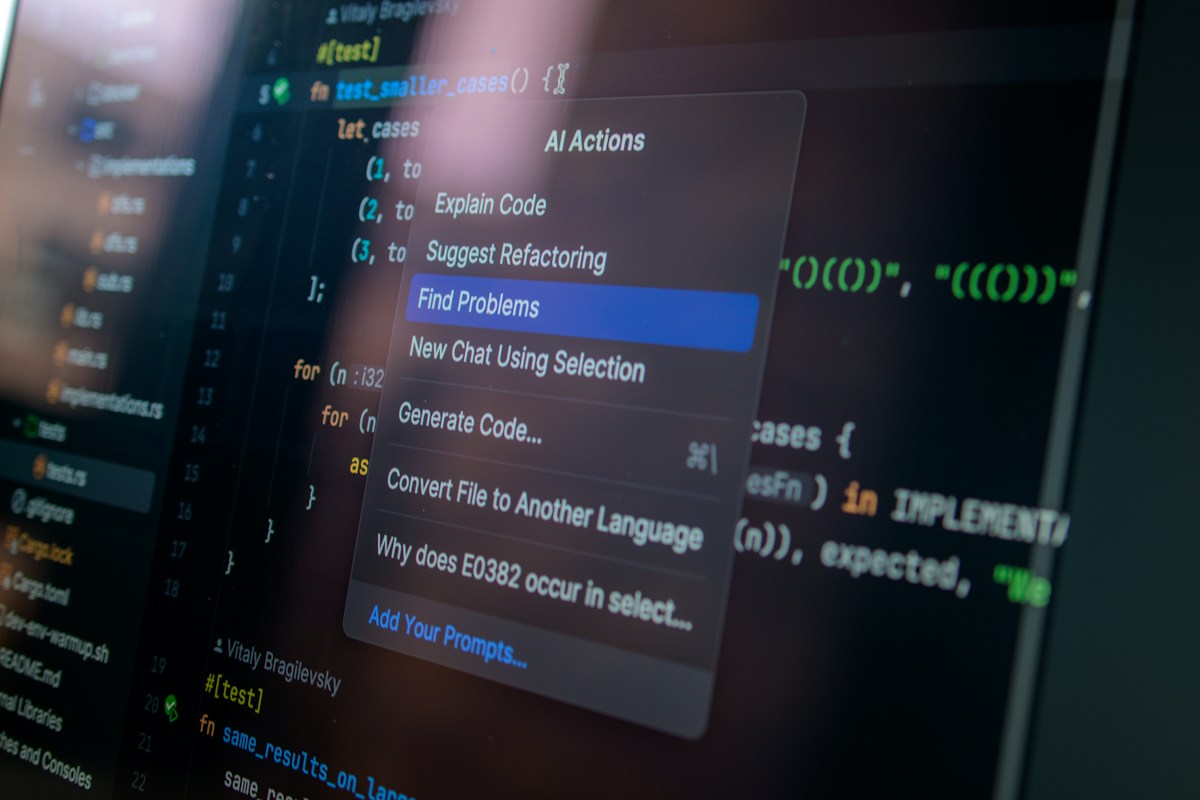
Debugging, a notorious time sink in software development, is being revolutionized by AI. Imagine an AI system that doesn't just flag errors, but intelligently pinpoints the root cause of a bug, even suggesting potential fixes. This capability stems from significant AI breakthroughs in pattern recognition and predictive analytics, allowing AI to learn from historical bug data and apply that knowledge to new code. For organizations concerned with AI governance, it’s crucial to implement these tools with clear guidelines, ensuring that AI-assisted debugging enhances, rather than replaces, human oversight and critical thinking. This collaboration leads to faster issue resolution and a substantial reduction in development costs.
Furthermore, AI advancements are transforming the entire testing paradigm. Beyond simple unit tests, AI-driven tools can generate comprehensive test cases, perform exploratory testing, and even predict potential failure points before they manifest. This proactive approach is vital for ensuring the reliability and security of enterprise-grade applications. For instance, AI threat detection systems, integrated into the testing phase, can identify vulnerabilities that might otherwise go unnoticed, significantly bolstering application security. The continuous feedback loop provided by AI-powered testing ensures that code quality remains consistently high throughout the machine learning development lifecycle, delivering tangible benefits for businesses aiming for excellence and efficiency.
Bridging the Gap: AI in Documentation and Knowledge Management
The burgeoning field of AI in documentation and knowledge management isn't just about automation; it's about fundamentally transforming how organizations capture, process, and disseminate information. We're witnessing significant AI breakthroughs that are pushing the boundaries of what's possible, from intelligent content generation to sophisticated information retrieval. For tech-savvy professionals and IT decision-makers, understanding these shifts is crucial. It’s no longer enough to just store data; the real value comes from making that data intelligently accessible and actionable, addressing the very pain points of information overload and inefficient knowledge sharing that plague many enterprises.
At the core of these advancements lies robust AI governance. As AI systems become more integrated into critical workflows, particularly in sensitive areas like documentation, establishing clear ethical guidelines and operational protocols is paramount. This includes ensuring data privacy, mitigating bias in AI-generated content, and maintaining the accuracy of information. Without sound governance, the very benefits AI promises—like enhanced productivity and accelerated insight—can be undermined by trust issues or regulatory hurdles. It's about building reliable, transparent systems that users can confidently depend on.
Furthermore, the continuous evolution in machine learning development is directly fueling these innovations. Algorithms are becoming more adept at understanding context, discerning nuances in human language, and even predicting information needs before they arise. This sophisticated understanding is critical for applications ranging from automated technical writing to personalized knowledge delivery. Simultaneously, organizations must also contend with AI threat detection. As AI systems become more powerful, so too does the potential for malicious actors to exploit vulnerabilities or manipulate information. Proactive security measures and continuous monitoring are essential to safeguard knowledge assets and maintain the integrity of documentation systems against evolving cyber threats.
These AI advancements are not just theoretical; they are delivering tangible benefits. Imagine an AI assistant that can instantly synthesize complex technical manuals into digestible summaries, or one that can identify critical dependencies across thousands of project documents. This significantly reduces the time developers spend searching for information, allowing them to focus on strategic tasks rather than administrative ones. It’s about creating a more intelligent, responsive, and secure information ecosystem, ensuring that knowledge is not just stored, but actively leveraged for competitive advantage and sustained innovation.
The Dawn of a New Development Era
We're standing at the precipice of a monumental shift in how software is conceived and constructed. The traditional paradigms of development are rapidly evolving, giving way to an era where intelligence isn't just embedded in the software we build, but also in how we build it. This isn't just about faster coding; it's about fundamentally rethinking the entire development lifecycle, driven by groundbreaking AI breakthroughs that are reshaping our capabilities. For tech-savvy professionals and organizations aiming to stay ahead, understanding these shifts isn't just beneficial—it's essential.
The sheer pace of AI advancements means that what was once futuristic is now becoming standard. We're seeing sophisticated machine learning development techniques being applied not only to solve complex business problems, but also to enhance the very tools developers use every day. This creates an environment where efficiency and innovation can truly flourish, allowing teams to deliver high-quality, customized software with unprecedented speed. It's about empowering developers to move beyond the mundane and focus on strategic, high-value tasks, addressing a critical pain point in traditional development.
However, with great power comes great responsibility. As AI becomes more integral to our development processes, the need for robust AI governance becomes paramount. We must carefully consider the ethical implications, ensure transparency in decision-making algorithms, and establish frameworks for accountability. This includes sophisticated AI threat detection mechanisms to safeguard against malicious uses and ensure the integrity of the solutions we deploy. Just as we emphasize The Security Imperative: Building Trust with Robust Software Quality Assurance and Coding Standards in all our projects, the same rigor must be applied to AI-driven development.
This new era promises not just incremental improvements, but transformative potential. Imagine systems that can anticipate development needs, automatically generate complex code, and even self-correct errors, allowing for truly agile and responsive development cycles. It's a future where the challenges of manual coding, testing, and debugging are significantly mitigated, freeing up resources to focus on creating truly innovative digital experiences. This aligns perfectly with the strategic imperative for enterprises to embrace agility, as explored in The Strategic Imperative: Why Enterprise Software Development Needs Agility. The opportunity to leverage these AI advancements for a faster time-to-market and reduced development costs is immense, pushing us towards an exciting, intelligent future in software development.