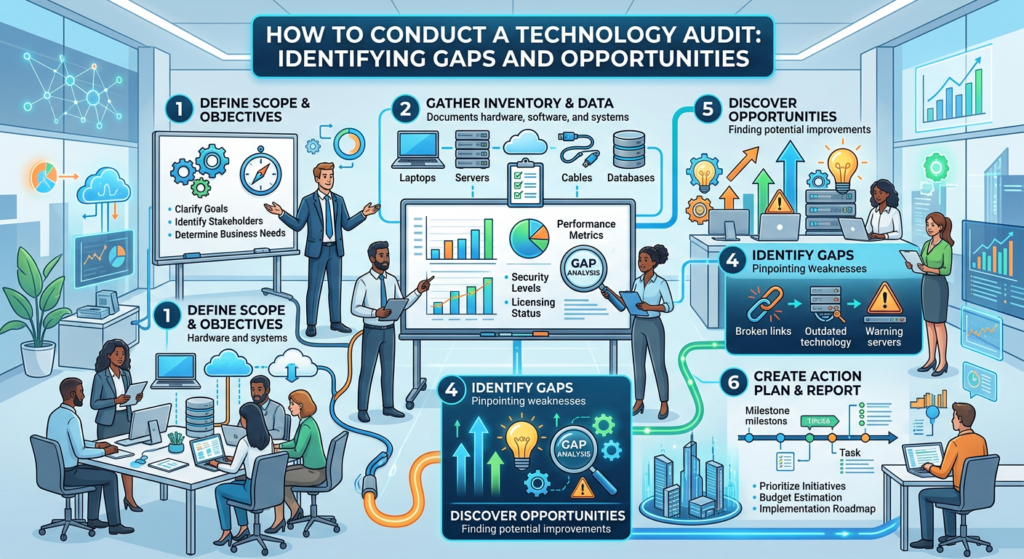
Unlocking Efficiency: The Power of a Technology Audit
Assessing your current IT infrastructure is a critical step in unlocking efficiency and driving business agility. For small businesses, this involves evaluating existing hardware, software, and network configurations to identify areas for improvement. By understanding the strengths and weaknesses of your current setup, you can make informed decisions about where to invest in new technologies or optimize existing resources.
A comprehensive assessment should consider factors such as software development language benefits, the scalability of your current infrastructure, and the potential for integration with new solutions. For instance, choosing the right programming languages for your software development needs can significantly impact performance and maintainability. Moreover, custom ERP solutions for small businesses can streamline operations and improve data-driven decision-making.
Regular software maintenance is also crucial to ensure your systems remain secure, efficient, and aligned with your business goals. This includes monitoring for potential issues, performing updates, and addressing any technical debt. By prioritizing maintenance and staying proactive, you can avoid costly downtime and ensure your technology continues to support your business objectives. For more insights on optimizing your IT infrastructure, visit Exquisite Software to explore our range of services and expertise.
Ultimately, a thorough assessment of your IT infrastructure lays the groundwork for implementing small business IT infrastructure solutions that drive efficiency, innovation, and growth. By leveraging the right technologies and expertise, you can overcome common challenges and achieve your business goals. If you’re ready to take the next step in transforming your IT infrastructure, consider reaching out to a trusted partner like Exquisite Software by visiting our contact page.

Defining Your Technology Audit Objectives
Defining your technology audit objectives is a crucial step in assessing your organization’s current IT infrastructure and identifying areas for improvement. For small businesses, this process can be particularly beneficial in optimizing their IT infrastructure solutions and ensuring they are well-positioned for future growth. By establishing clear objectives, you can ensure that your technology audit is focused on addressing the most critical issues and opportunities.
When defining your technology audit objectives, consider the benefits of various software development languages and how they can impact your business agility. For instance, selecting the right language can significantly enhance your software development for business agility, allowing you to respond more quickly to changing market conditions. Additionally, evaluating your current software maintenance practices can help you identify opportunities to reduce costs and improve overall system reliability, which is essential for small business software maintenance.
To get the most out of your technology audit, it’s essential to consider your organization’s specific needs and goals. For example, if you’re looking to implement custom ERP solutions for small business, your audit objectives should focus on assessing the current ERP system’s effectiveness and identifying opportunities for improvement. You can learn more about our approach to custom software development by visiting our website. If you’re ready to get started with a technology audit, feel free to contact us to discuss your needs and objectives.

Assessing Current Technology Infrastructure
Assessing your current technology infrastructure is a crucial step in determining the right path forward for your business. As a decision-maker, you need to evaluate whether your existing small business IT infrastructure solutions are meeting your needs or hindering your growth. This involves taking a close look at your current software applications, hardware, and overall IT ecosystem to identify areas of strength and weakness.
One key aspect to consider is the programming languages used in your software development. Different software development languages offer various benefits, such as improved performance, enhanced security, or increased developer productivity. For instance, choosing the right language can significantly impact the scalability and maintainability of your custom ERP solutions for small business. It’s essential to assess whether your current technology stack is aligned with your business goals and if it’s enabling or limiting your ability to innovate.
Regular small business software maintenance is also vital to ensure your systems remain efficient, secure, and compliant with regulatory requirements. Outdated or poorly maintained software can lead to decreased productivity, increased downtime, and potential security risks. By evaluating your current maintenance practices, you can identify opportunities to improve your overall IT infrastructure and reduce the risk of costly repairs or replacements down the line.
To drive business agility and stay competitive, it’s crucial to have software development for business agility that can adapt quickly to changing market conditions. This may involve adopting new technologies, such as cloud computing or AI/ML, or leveraging AI project management tools to streamline your development processes. By assessing your current technology infrastructure and identifying areas for improvement, you can create a roadmap for future growth and innovation.
If you’re unsure about how to assess your current technology infrastructure or need guidance on implementing new solutions, consider reaching out to a trusted partner like Exquisite Software. With over 18 years of experience in custom software development, they can help you navigate the complexities of modern IT infrastructure and create tailored solutions that meet your unique business needs. You can contact them to learn more about their services and expertise.

Identifying Gaps and Inefficiencies
To drive business transformation, it’s essential to identify gaps and inefficiencies in your current IT infrastructure. For small businesses, this often means assessing their existing software solutions and determining whether they align with their operational needs. Custom ERP solutions can play a critical role in this process by providing a tailored approach to managing business operations, from financials to supply chain management.
When evaluating your IT infrastructure, consider the benefits of adopting a software development language that supports agility and scalability. By choosing the right language, you can ensure that your software solutions are not only efficient but also adaptable to changing business needs. This is particularly important for small businesses, where the ability to pivot quickly can be a significant competitive advantage.
Effective small business software maintenance is also crucial for ensuring that your systems continue to operate smoothly over time. Regular updates and maintenance can help prevent technical issues, reduce downtime, and ensure that your software remains secure. By prioritizing maintenance, you can protect your investment in custom software solutions and ensure that they continue to support your business goals.
As you analyze your IT infrastructure, consider the potential benefits of software development for business agility. By leveraging agile development methodologies, you can create software solutions that are responsive to changing business needs and customer demands. This can be particularly valuable in today’s fast-paced business environment, where the ability to innovate quickly is essential for staying ahead of the competition.
Ultimately, the key to identifying gaps and inefficiencies in your IT infrastructure is to take a holistic approach that considers your business needs, technology infrastructure, and software solutions. By doing so, you can create a robust and agile IT ecosystem that supports your business goals and drives long-term success.

Leveraging AI and Automation Opportunities
To achieve business agility, it’s crucial to streamline software maintenance. This involves adopting best practices that ensure your software remains efficient, scalable, and aligned with your evolving business needs. By leveraging the right small business IT infrastructure solutions, you can simplify maintenance tasks and reduce the burden on your IT team.
One key aspect of streamlining software maintenance is selecting the appropriate software development language. Different languages offer various benefits, such as improved performance, enhanced security, or faster development times. For instance, choosing a language that’s well-suited for your project’s requirements can significantly reduce maintenance efforts down the line. Moreover, investing in custom ERP solutions for small businesses can help integrate various functions, making it easier to manage and maintain your software ecosystem.
Effective small business software maintenance also involves implementing proactive strategies. This includes regular updates, continuous monitoring, and timely interventions to prevent issues before they escalate. By adopting a proactive approach, you can minimize downtime, reduce costs, and ensure your software continues to support your business goals. Furthermore, software development for business agility requires a focus on flexibility and adaptability, enabling your organization to respond quickly to changing market conditions and customer needs.

Evaluating Cross-Platform Frameworks and Their Impact
When it comes to driving business agility and efficiency, the choice of software development language plays a crucial role. Different programming languages offer unique benefits that can significantly impact the development process, maintenance, and overall scalability of software solutions. For small businesses, selecting the right language can be particularly important as it directly influences their IT infrastructure solutions and ability to adapt to changing market demands.
The benefits of a well-chosen software development language extend beyond the initial development phase. For instance, languages that support modularity and reusability can greatly simplify small business software maintenance, reducing the time and resources required to update or expand the software. Moreover, languages with strong community support and extensive libraries can accelerate development, enabling businesses to bring new features to market more quickly.
For businesses looking to implement custom ERP solutions or other complex software systems, the choice of development language can have a profound impact on the project’s success. Languages that are well-suited to the specific needs of the business can enhance the software’s performance, reliability, and user experience. As discussed in our guide on cross-platform mobile development, a thoughtful approach to language selection is essential for achieving business objectives through software development.
Ultimately, the right software development language can empower businesses to achieve greater agility, improve their competitive position, and drive long-term growth. By carefully evaluating the benefits and trade-offs of different languages, businesses can make informed decisions that support their strategic goals and enhance their overall software development capabilities.
Continuous Deployment and Scalability
As businesses grow and evolve, their IT infrastructure must adapt to support new demands. Implementing effective small business IT infrastructure solutions is crucial for ensuring scalability, reliability, and performance. By leveraging the right technologies and strategies, companies can create a solid foundation for their operations, enabling them to respond quickly to changing market conditions and customer needs.
One key aspect of a robust IT infrastructure is the use of a suitable software development language. The benefits of choosing the right language can be significant, from improved maintainability and scalability to enhanced security and performance. For instance, selecting a language that supports agile development methodologies can facilitate software development for business agility, allowing companies to rapidly respond to new opportunities and challenges.
Regular software maintenance is also vital for ensuring the ongoing health and performance of a company’s IT infrastructure. Small business software maintenance involves monitoring systems, addressing issues promptly, and implementing updates and improvements as needed. By prioritizing maintenance, businesses can minimize downtime, reduce the risk of data breaches, and ensure their systems remain aligned with their evolving needs.
For many businesses, custom ERP solutions can play a critical role in streamlining operations and driving growth. By providing a centralized platform for managing key functions such as finance, HR, and supply chain management, custom ERP solutions can help companies improve efficiency, reduce costs, and enhance decision-making. When combined with a robust IT infrastructure, these solutions can help businesses achieve greater agility and responsiveness in an increasingly competitive marketplace.

Transforming Your Technology Landscape
Transforming your technology landscape is crucial for businesses to stay competitive in today’s fast-paced digital world. As a business leader, you’re likely aware that your company’s technology infrastructure plays a vital role in driving growth, efficiency, and innovation. At Exquisite Software, we’ve seen firsthand how custom software solutions can help businesses overcome common pain points, such as legacy systems and technology debt, lack of customization, and integration issues.
One key aspect of transforming your technology landscape is implementing effective small business IT infrastructure solutions. This involves assessing your current infrastructure and identifying areas for improvement, such as upgrading hardware, adopting cloud computing, or implementing new network security measures. By doing so, you can create a more agile, scalable, and secure foundation for your business.
Another critical component is leveraging the right software development language benefits. Choosing the right programming language for your custom software solution can significantly impact its performance, maintainability, and scalability. Our team of experts can help you navigate the complex landscape of software development languages and select the best fit for your business needs.
To ensure the long-term success of your custom software solution, it’s essential to prioritize small business software maintenance. Regular updates, bug fixes, and performance optimizations are crucial to keeping your software running smoothly and securely. Additionally, software development for business agility is vital in today’s rapidly changing market landscape. By adopting agile development methodologies and leveraging cutting-edge technologies, you can create software that adapts quickly to evolving business needs.
For businesses with complex operational needs, custom ERP solutions can be a game-changer. By streamlining processes, improving data visibility, and enhancing decision-making, custom ERP solutions can help drive business growth and efficiency. At Exquisite Software, we’ve delivered numerous custom ERP solutions for small businesses, helping them overcome unique challenges and achieve their goals.

Build the Future of Your Business
Exquisite Software specializes in custom mobile app development and consulting that moves your vision forward. Get expert support at every stage — from strategy to launch. Contact us today to get started.